
For a lot of parents, the idea of taking a child to the dentist for the first time sounds simple in theory and a little stressful in real life. You book the appointment, show up, and hope everything goes smoothly. But when your child is naturally anxious, sensitive to new places, or the kind of kid who gets nervous even before a haircut or checkup, that first dental visit can feel much bigger than it looks on paper.
That is exactly why this conversation matters during Mental Health Awareness Month 2026. A child’s emotional experience matters just as much as the appointment itself. Kids are not only reacting to teeth being checked. They are reacting to unfamiliar sounds, bright lights, new faces, strange tools, and the feeling of not knowing what comes next. For an anxious child, that combination can feel like a lot.
At KIDSKARE, the goal is not to push children through an appointment as quickly as possible. The goal is to help families create a first experience that feels manageable, calm, and supportive. That starts with understanding one simple truth: a successful visit does not have to be a perfect visit. It just needs to be a gentle beginning.
Anxiety can show up before the appointment even starts
Some kids talk openly about being scared. Others do not say much at all, but their behavior tells the story. They may cling more than usual, ask the same questions over and over, get quiet in the car, or suddenly say they do not want to go. Sometimes the stress starts days before the appointment. Sometimes it shows up right in the waiting room.
That is why finding the right fit matters. When parents search for a pediatric dentist near me, they are often looking for more than location. They are looking for a place where the environment feels warm, the communication feels patient, and the team understands that some children need extra reassurance before they feel safe enough to cooperate.
A first visit can feel very different depending on the setting. A calm, child-friendly space often helps lower the temperature of the whole experience, not just for the child, but for the parent too.
The best preparation usually happens at home
If you want the appointment to feel less overwhelming, preparation matters. Not intense preparation. Not a giant speech. Just simple, steady, reassuring preparation that gives your child a sense of what to expect.
A few things can help before the visit:
- Talk about the dentist in a calm, normal tone
- Keep explanations short and simple
- Practice opening wide in front of a mirror
- Pretend to count teeth together at home
- Read a story about going to the dentist
- Let your child bring one comfort item
- Avoid surprising them with the appointment at the last minute
- Stay away from words that sound scary or dramatic
These little moments make a difference because they turn the experience into something more familiar. Even a basic explanation like “they are going to count your teeth and make sure your mouth is healthy” can make a kids dental checkup feel less mysterious.
Kids pick up more than adults realize
One thing parents do not always notice is how closely children read adult energy. If you sound tense, overly excited, apologetic, or worried, your child will probably feel that something uncomfortable is coming. That does not mean you have to fake being cheerful. It just means your calm presence matters.
Try to treat the visit like any other normal health routine. The more ordinary it feels, the less pressure your child may put on the moment.
That same mindset matters in children’s dental care overall. When oral health is presented as a regular part of growing up, instead of a stressful event that only happens when something is wrong, kids usually build more comfort over time. The first appointment is not just about the dentist looking at teeth. It is about shaping the emotional tone around dental care from the very beginning.
It helps to redefine what success looks like
A lot of parents go into the first visit hoping their child will sit perfectly still, answer every question, smile at the dentist, and breeze through the whole thing. That can happen, but it is not the only version of success.
For an anxious child, success may look more like this:
- Walking into the office without tears
- Sitting in the chair for a minute
- Letting the dentist say hello
- Opening their mouth briefly
- Tolerating a short look at the teeth
- Leaving without the experience feeling scary or forced
That is still progress. Real progress.
A first dentist appointment for kids does not need to check every box on day one. In fact, when children are given a little space to warm up, they often do better long term. Pressure can backfire. Patience usually works better.
Predictability makes kids feel safer
Anxiety tends to grow when children do not know what is going to happen next. Predictability helps shrink that fear. When possible, it helps to walk your child through the visit in simple steps: first we check in, then we wait a little, then we meet the dentist, then they look at your teeth, then we are done.
This is one reason many families prefer family dentistry for children that understands how to guide young patients through transitions in a softer, more approachable way. Kids usually respond well when things are explained clearly and the adults around them are not rushing the process.
Parents can also help by keeping the day itself as smooth as possible. Try not to schedule the visit during a time when your child is usually tired, hungry, or already overstimulated. A small choice like picking the right time of day can completely change how the appointment feels.
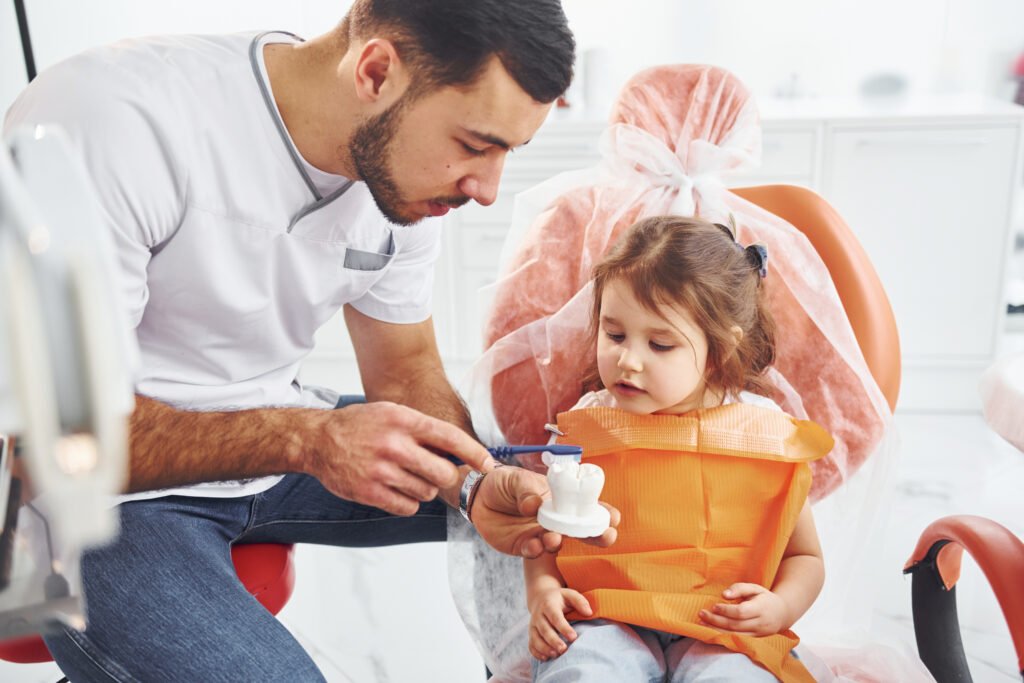
The exam is often simpler than parents expect
Sometimes the fear around the dentist gets bigger because families imagine a long or uncomfortable first visit. In reality, early appointments are often pretty straightforward. The first visit is usually more about introduction, observation, and trust than anything else.
A pediatric dental exam may include:
- A quick look at the teeth and gums
- Counting teeth and checking development
- Looking for early signs of cavities or plaque buildup
- Talking with parents about brushing habits
- Answering questions about snacks, pacifiers, or thumb sucking
- Offering guidance that fits the child’s age and stage
For anxious kids, even this lighter structure can feel like enough for one day. That is okay. The point is not to push past their limit. The point is to create a first memory that feels safe enough to build on later.
What parents can do in the room
Your role during the visit matters more than you may think. Kids often use their parent as the emotional anchor in the room. If you are steady, supportive, and not overly reactive, they are more likely to settle.
A few useful reminders:
- Let the dental team lead when appropriate
- Use short, familiar phrases your child already knows
- Praise effort more than performance
- Avoid bribing in a way that raises pressure
- Do not shame fear or say “big kids don’t cry”
- Stay patient if the visit needs to move slowly
Sometimes the most helpful thing a parent can do is simply stay calm and let the moment be what it is. Not every child will be instantly comfortable, and that does not mean the appointment failed.
Final Thoughts
A first dental visit can feel like a big deal, especially when your child is naturally anxious. But it does not have to become a battle or a stressful family memory. With a little preparation, realistic expectations, and a calm approach, that first experience can feel much gentler than many parents expect.
What matters most is helping your child feel supported, not rushed. Trust usually builds in small steps, and those small steps count. At KIDSKARE, creating a positive beginning is what helps children grow into more confident, comfortable patients over time.