
Helping children develop healthy oral care habits from an early age is one of the most important steps parents can take toward long-term dental wellness. Teaching proper tooth brushing not only lays the foundation for a bright, confident smile but also reduces the risk of painful and preventable dental issues. By transforming brushing into a fun, educational, and consistent routine, families can equip kids with skills that protect their teeth for life.
At KidsKare P.C. Family Dentistry, encouraging strong habits during childhood is central to promoting lifelong oral health. Parents often ask how to make brushing easier and more effective, and the answer begins with simple guidance, the right tools, and engaging routines kids can enjoy.
Why Early Brushing Habits Matter
Children’s teeth are still developing, which makes them more vulnerable to decay. Without proper technique and consistent routines, food particles, plaque, and bacteria can accumulate quickly. Starting good habits early helps kids take ownership of their health and reduces the likelihood of cavities, dental discomfort, and future interventions.
Strong brushing habits also build confidence. When children see their teeth stay clean and shiny, they feel proud—and that pride encourages them to keep brushing well.
Step-by-Step Techniques That Kids Can Understand
Teaching brushing isn’t just about telling kids what to do—it’s about showing them how to do it correctly. Visual learning, hands-on demonstrations, and fun analogies make a big difference. Keeping instructions simple and clear helps children stay engaged and repeat the routine on their own.
Core Techniques to Teach Children:
- Hold the toothbrush at a slight angle toward the gums.
- Use small, gentle, circular movements.
- Brush all surfaces: outer, inner, and chewing areas.
- Brush the tongue to remove bacteria and freshen breath.
- Spend at least two minutes brushing every time.
These steps turn brushing into a complete and effective cleaning routine that children can follow daily.
Helpful Routines and Engagement Strategies
Kids often learn best through structure, repetition, and fun. Turning brushing into a positive experience reinforces good habits without power struggles or stress.
Ideas to Make Brushing Engaging:
- Use a timer or a brushing song to reach the two-minute mark.
- Create a sticker chart to celebrate consistency.
- Offer choices—let kids pick the toothpaste flavor.
- Brush together as a family to model proper habits.
- Turn brushing into a mini-story, like “chasing the sugar bugs away.”
When brushing becomes enjoyable, kids are more willing to participate and learn.
Use the Right Tools for Better Results
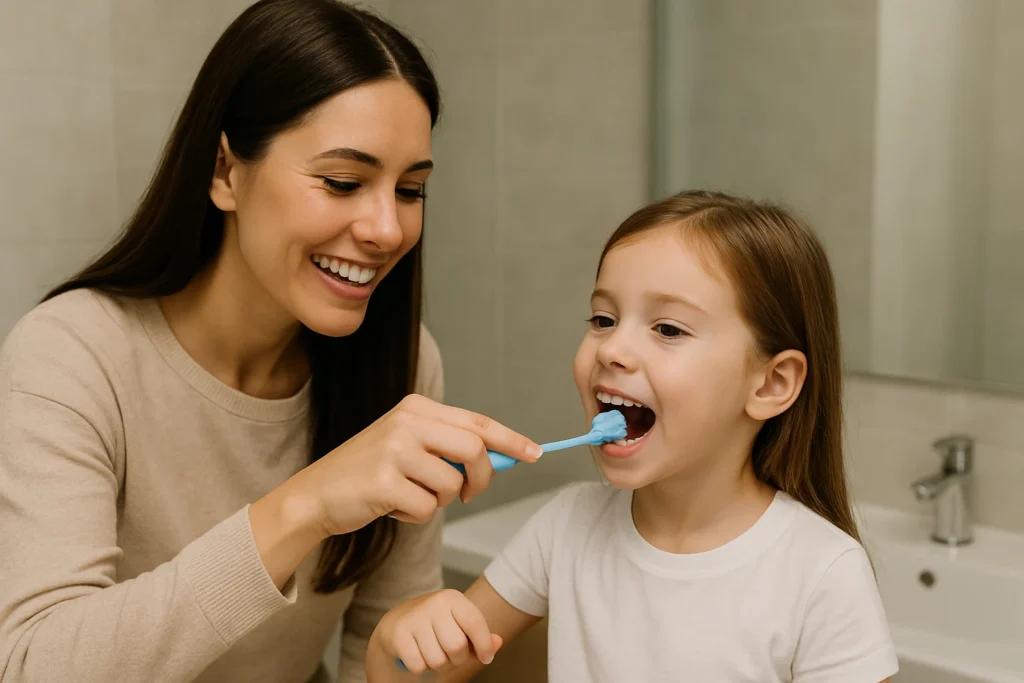
Finding the best toothbrush for children can make brushing more comfortable and effective. Many kids prefer soft bristles, small brush heads, and handles designed for little hands. Electric toothbrushes can also be helpful because they add movement and make brushing feel like a game.
Parents should look for toothbrushes with:
- Soft, flexible bristles
- Age-appropriate sizes
- Non-slip grips
- Fun colors or characters
- Gentle vibration features (if electric)
A toothbrush kids love encourages them to brush more often—and more thoroughly.
Additional Ways to Support Oral Health at Home
Teaching oral hygiene goes beyond brushing. Parents play a crucial role in helping their children understand why cleaning their teeth is important and how daily habits can protect their smile.
Simple At-Home Strategies:
- Use fluoride toothpaste in kid-safe amounts.
- Replace toothbrushes every three months.
- Keep sugary snacks limited and offer healthier alternatives.
- Encourage drinking water throughout the day.
- Supervise brushing until children develop consistency and skill.
These easy steps strengthen daily dental hygiene for children, making brushing a routine instead of a chore.
How Brushing Helps Prevent Cavities
One of the main goals of teaching brushing is to prevent cavities in kids, but understanding the “why” behind brushing helps children stay more committed. Cavities occur when bacteria feed on sugars left on the teeth, creating acids that wear down enamel. Brushing removes this buildup and protects the teeth from decay.
Helping kids understand that brushing keeps “sugar bugs” away makes the process meaningful in a way they can relate to. When brushing has purpose, kids are more motivated to do it right.
Effective Guidance for Parents: Practical Tips That Work
Parents sometimes struggle to keep brushing consistent—especially with younger children. But a few simple adjustments can help families build a steady routine that promotes lifelong oral health.
Parent-Friendly Tips
- Start modeling brushing early, even before teeth erupt.
- Offer praise, not pressure, to motivate cooperation.
- Use mirrors so kids can watch themselves brush.
- Turn brushing into a bonding moment instead of a task.
- Introduce educational videos or apps for interactive learning.
These kids brushing tips make it easier for families to develop a brushing routine that sticks.
Professional Support Makes a Difference
While parents guide daily routines, regular dental checkups provide children with extra support. Dentists can demonstrate brushing techniques, recommend personalized tools, and identify early signs of decay before they become major problems.
KidsKare P.C. Family Dentistry specializes in teaching children how to care for their smiles confidently, ensuring they have the tools and knowledge needed to maintain strong oral habits.
Conclusion
Helping children build strong brushing habits is one of the most valuable gifts parents can give. With the right techniques, tools, and support, kids can develop confidence, maintain healthy smiles, and reduce the risk of cavities as they grow. By turning brushing into a positive and educational experience, families set the stage for lifelong oral health—one bright smile at a time.